
Blog_BS_BG854819

 New Korea Style Assorted Color Protect Skin Cell Phone Case Cover for iPhone 6
Protect your valuable and essential phone from scratches, drops, and other damages.
*This is a BRAND NEW premium quality case, custom-designed to fit your phone perfectly.
*it allows easy snap-on installation, required no tools.
New Korea Style Assorted Color Protect Skin Cell Phone Case Cover for iPhone 6
Protect your valuable and essential phone from scratches, drops, and other damages.
*This is a BRAND NEW premium quality case, custom-designed to fit your phone perfectly.
*it allows easy snap-on installation, required no tools.


 ====================================================================================================
Nine Eagles Galaxy visitor 6 MOLA M24 FPV Quadcopter with HD Camera
Description:
Brand Name: Nine Eagles
Item Name: Mola M24
TX: NE-TXOS216-D 2.4GHz 4CH
RX: NE-MASF24
Battery (MOLA M24): 1S 3.7V 700mAh 25C Li-Po
Battery (TX): AA size battery*4
Flight time: ?10 mins
Flight Distance:>100m
Charger: NE-CH1020M 1S Li-Po, USB input, JST output
Motor: 8520 coreless motor*4
Main rotor dia.: 160mm
Rotor wheelbase: 238mm
Fight Weight: 125g (Battery included)
Dimension: 196*194*64mm
Box dimension: 385*130*264mm
WIFI Camera
SD card : support 32G Micro SD card
Codec video: motion JPEG, 1280*720 30fps .flv
Codec audio: Mono
Image capture: 1280*720 96dpi .jpg
Dimension: 45*25*8mm
Transmission Distance: ?100m (without any interference)
Features:
With HD 720P WiFi FPV camera, entry level FPV aircraft
Mini size, aerodynamic body frame design
6 axis gyro,stable flight,easy operation, can fly both indoor and outdoor
Support iOS and Android system
Two sensitivity level exchange
Flight time up to 10 minutes
Package Included:
1 x Quadcopter
1 x Transmitter
1 x USB charger
2 x Battery
4 x AA battery
1 x Camera
1 x 2G SD Card
1 x Card Reader
1 x Phone Holder
1 x Shade Cover
1 x Spare Part Pack
====================================================================================================
Nine Eagles Galaxy visitor 6 MOLA M24 FPV Quadcopter with HD Camera
Description:
Brand Name: Nine Eagles
Item Name: Mola M24
TX: NE-TXOS216-D 2.4GHz 4CH
RX: NE-MASF24
Battery (MOLA M24): 1S 3.7V 700mAh 25C Li-Po
Battery (TX): AA size battery*4
Flight time: ?10 mins
Flight Distance:>100m
Charger: NE-CH1020M 1S Li-Po, USB input, JST output
Motor: 8520 coreless motor*4
Main rotor dia.: 160mm
Rotor wheelbase: 238mm
Fight Weight: 125g (Battery included)
Dimension: 196*194*64mm
Box dimension: 385*130*264mm
WIFI Camera
SD card : support 32G Micro SD card
Codec video: motion JPEG, 1280*720 30fps .flv
Codec audio: Mono
Image capture: 1280*720 96dpi .jpg
Dimension: 45*25*8mm
Transmission Distance: ?100m (without any interference)
Features:
With HD 720P WiFi FPV camera, entry level FPV aircraft
Mini size, aerodynamic body frame design
6 axis gyro,stable flight,easy operation, can fly both indoor and outdoor
Support iOS and Android system
Two sensitivity level exchange
Flight time up to 10 minutes
Package Included:
1 x Quadcopter
1 x Transmitter
1 x USB charger
2 x Battery
4 x AA battery
1 x Camera
1 x 2G SD Card
1 x Card Reader
1 x Phone Holder
1 x Shade Cover
1 x Spare Part Pack
Natural Wellbeing
 Welcome to Natural Wellbeing, your trusted source for holistic and natural wellness support. Founded in 2001, we are committed to providing a complete range of the finest quality herbs, vitamins, minerals, and other natural supplements, for you and your whole family. Our professional herbalists and in-house experts formulate our products to ensure the most effective supplements available, and all of the products we offer are combined with a dedication to superior customer service - our loyal customers return again and again! We are proud to be your destination for maintaining a healthy, happy lifestyle.
iFixit’s extensive iPhone 5 teardown shows off Apple’s attention to detail [video]
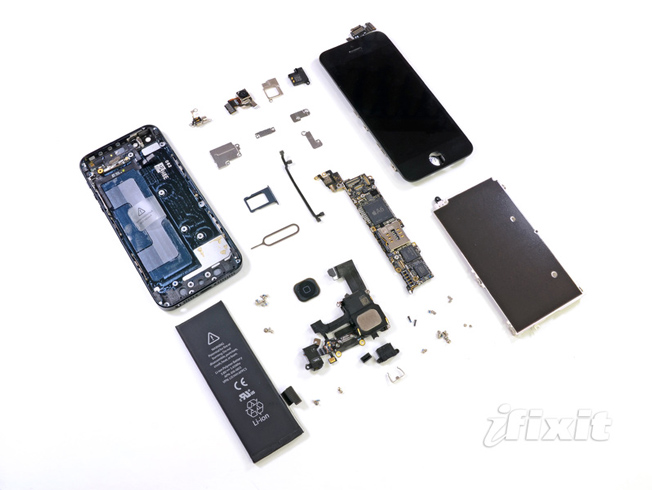
By: Raymond Wong | Sep 22nd, 2012 ======================================================================= -----------------------------------------------------------------------------------------------------------------------------------


Sales of the iPhone 4 by China Unicom hit 100,000 in the first four days of availability. Another 100,000 customers will have to wait until as late as the end of October for their preorders to be fulfilled.
China Unicom announced the figures Tuesday, the People's Daily reports. First day shipments exceeded 40,000 units, with the total reaching 100,000 within the first few days after launch.
Chinese demand for the iPhone 4 has been greater than expected. According to China Unicom, over 200,000 customers preordered the smartphone in the week leading up to the launch. The 100,000 customers who preordered the iPhone and have yet to receive it should get their phones by the end of next month, China Unicom said.
Apple and China Unicom have built upon last year's launch. "The sales of previous versions of iPhones created a solid foundation for the explosive performance of the iPhone 4 this year," China Unicom senior vice-president Li Gang said.
In the first week after the initial iPhone launch in 2009, China Unicom signed up just 5,000 iPhone customers.
Heavy subsidies of the iPhone 4 may be driving sales. According to a China Unicom press release (Google Translation), customers who sign up for the 16GB iPhone 4 with a 2-year contract and a 286RMB ($43) monthly plan will pay nothing for the phone.
Last week, thousands of fans lined up outside Apple's Chinese retail stores eager to purchase the new handset.
Apple did not respond to a request for the iPhone 4's sales figures from Apple's four stores in China.
(Credited to http://www.appleinsider.com)
------------------------------------------------------------------------------------

Our new micro-crystal medicine and 24/7 Skin Care Advisor support for ActivMembers™ are just two parts of our more powerful, more complete approach to treating acne.
Renew
This medicated Renewing Cleanser is made with new, exclusive micro-crystal benzoyl peroxide — featuring smaller, finer particles designed to quickly penetrate pores to start killing acne-causing bacteria on contact. Tiny exfoliating beads gently remove dirt, excess oil and dead skin cells to help keep pores from clogging.
Revitalize
This refreshing, alcohol-free toner helps remove impurities and excess oil so your skin looks and feels clean, soft and refreshed -- not tight and dried out. Soothing botanical agents gently balance your skin tone.
Repair
The repairing treatment is a feather-light medicated lotion that gets deep into clogged pores faster but is designed to be gentler on the skin. It's an oil-free formula that's safe for your entire face.
-------------------------------------------------------------------------------------
Tesla breaks record for going the distance

•A record for a Tesla Roadster driven on a single charge was set at 313 miles (501 km) in Australia on Tuesday.
•Tesla Roadster owner Simon Hackett and his friend Emilis Prelgauskas drove his electric sports car from Alice Springs, Northern Territory, to Coober Pedy, South Australia, as part of an alternative-fuel vehicle rally called the Global Green Challenge.
•The Tesla's electric-charge port door was sealed shut at the start of the 313-mile journey and the trip was filmed for a documentary, as well as monitored by contest officials. The Tesla's lithium ion battery, which the company assures owners will last over 200 miles between charges under normal driving circumstances, had 3 miles to spare when the team reached its destination in Coober Pedy, according to Hackett's chronicles of the race experience on his company blog. (Hackett happens to also be the founder and managing director of Internode, an Australian national broadband and Internet services company.)
•Hackett said in his blog the achievement is actually a record for any production electric car, not just a Tesla Roadster, which is why his team was so careful to record it. To squeeze as much distance out of the Tesla's battery as they could, Hackett and Prelgauskas tried to drive at a consistent speed of 55 kph (roughly 34 mph) for a large portion of the almost 12-hour journey.
•"The security seal was applied to the charge port door when we started the journey. As this is being done as part of the Global Green Challenge, we have a full set of official verifiers here who will attest to the results and to achieving the outcome. We were followed along the journey by our support crew and a documentary film crew--so we have it on film," said Hackett.
•While Tesla Motors is not an official sponsor of the contest or Hackett, the company has shown support by spreading the news of Hackett's success. It's not hard to imagine why as Tesla poises for a major retail expansion.
•The stunt may certainly speak to consumers who likely drive nowhere near 313 miles in a single day, but are still reluctant to hem themselves in with a car restricted to a limited number of miles between recharges.
Tesla raises $82.5 million for new retail stores
 Tesla Motors has garnered $82.5 million in "Series F" funding for the purpose of expanding its chain of stores in North America and Europe.
The deal was first announced Monday by participating investor Fjord Capital Partners. Tesla Motors then confirmed the deal to several news outlets on Tuesday. Daimler, already a 10 percent investor in Tesla, and Abu Dhabi fund Aabar Investments also contributed to the fund.
The California-based electric-vehicle manufacturer has had stores in Los Angeles and Menlo Park, Calif., for some time. It recently opened stores in New York, Chicago, Miami, London, Seattle, and Munich. It has plans to open a store in Monaco before the end of the year, and has said it's scouting for locations in Washington, D.C., and Toronto.
But don't call them dealerships.
Because the electric cars are light on service work, and don't need things like oil changes, Tesla plans to forgo the traditional dealership/service business model of yesteryear's car industry. Instead the company plans to maintain full retail control over its cars and brand, Tesla announced in early September.
"Tesla takes its showroom cues from Apple, Starbucks and other customer-focused retailers. Tesla stores provide a welcoming spot to surf the Web, test drive cars and learn more about Tesla, the only production automaker selling highway-capable EVs in North America or Europe," Tesla said in statement.
News of the latest funding deal also follows the unveiling of Tesla's production model of the Model S sedan, as well as a tuner version of its Roadster, at the 2009 Frankfurt auto show this week.
The prototype of the Model S was unveiled in March as a way to augment Tesla's lineup with a more "economical" option to its Roadster luxury sports car. The Model S is expected to cost around $50,000--about half the cost of the Roadster.
Smart meters coming to a utility near you

After 100 years, the lowly utility meter is poised for a digital upgrade, with the installation of up to 250 million expected over the next six years, according to a new forecast.
Pike Research published on Monday a research report on smart meters that predicts installation to ramp up at a 19 percent annual rate through 2015.
Smart meters use wireless networking to shuttle information back and forth between utilities and customers. So far, the communications link has been used mainly to report back usage for monthly billing, but there are new applications aimed at efficiency.
Consumers can, in some cases, get a real-time read-out of electricity consumption or see a graph of a full day's use. Smart meters are also designed to help consumers take advantage of off-peak rates. Utilities are generally interested in moving usage to off-peak times and running power plants more efficiently.
A person could, for example, schedule a dishwasher to run or charge a plug-in vehicle in the middle of the night. Information from the smart meter signals when cheaper rates are in effect.
Pike's forecast notes that the push to smart meters is global, driven by government interest in energy efficiency. The U.S. Department of Energy's smart-grid grant program announced last week is expected to result in 18 million smart meter installations across the nation. About 3.5 percent of the world's meters can be considered "smart," with the number set to grow to 18 percent by 2015.
Despite the spike in installations, there are a number of technical barriers to overcome, including a lack of standards. In particular, there is a "jumble" of different neighborhood-area networking technologies to carry data from homes back to utilities. The most advanced smart meters have the ability to connect to home-area networks.
Pike Research published on Monday a research report on smart meters that predicts installation to ramp up at a 19 percent annual rate through 2015.
Smart meters use wireless networking to shuttle information back and forth between utilities and customers. So far, the communications link has been used mainly to report back usage for monthly billing, but there are new applications aimed at efficiency.
Consumers can, in some cases, get a real-time read-out of electricity consumption or see a graph of a full day's use. Smart meters are also designed to help consumers take advantage of off-peak rates. Utilities are generally interested in moving usage to off-peak times and running power plants more efficiently.
A person could, for example, schedule a dishwasher to run or charge a plug-in vehicle in the middle of the night. Information from the smart meter signals when cheaper rates are in effect.
Pike's forecast notes that the push to smart meters is global, driven by government interest in energy efficiency. The U.S. Department of Energy's smart-grid grant program announced last week is expected to result in 18 million smart meter installations across the nation. About 3.5 percent of the world's meters can be considered "smart," with the number set to grow to 18 percent by 2015.
Despite the spike in installations, there are a number of technical barriers to overcome, including a lack of standards. In particular, there is a "jumble" of different neighborhood-area networking technologies to carry data from homes back to utilities. The most advanced smart meters have the ability to connect to home-area networks.
Smart meters coming to a utility near you
After 100 years, the lowly utility meter is poised for a digital upgrade, with the installation of up to 250 million expected over the next six years, according to a new forecast.
Pike Research published on Monday a research report on smart meters that predicts installation to ramp up at a 19 percent annual rate through 2015.
Smart meters use wireless networking to shuttle information back and forth between utilities and customers. So far, the communications link has been used mainly to report back usage for monthly billing, but there are new applications aimed at efficiency.
Consumers can, in some cases, get a real-time read-out of electricity consumption or see a graph of a full day's use. Smart meters are also designed to help consumers take advantage of off-peak rates. Utilities are generally interested in moving usage to off-peak times and running power plants more efficiently.
A person could, for example, schedule a dishwasher to run or charge a plug-in vehicle in the middle of the night. Information from the smart meter signals when cheaper rates are in effect.
Pike's forecast notes that the push to smart meters is global, driven by government interest in energy efficiency. The U.S. Department of Energy's smart-grid grant program announced last week is expected to result in 18 million smart meter installations across the nation. About 3.5 percent of the world's meters can be considered "smart," with the number set to grow to 18 percent by 2015.
Despite the spike in installations, there are a number of technical barriers to overcome, including a lack of standards. In particular, there is a "jumble" of different neighborhood-area networking technologies to carry data from homes back to utilities. The most advanced smart meters have the ability to connect to home-area networks.
Pike Research published on Monday a research report on smart meters that predicts installation to ramp up at a 19 percent annual rate through 2015.
Smart meters use wireless networking to shuttle information back and forth between utilities and customers. So far, the communications link has been used mainly to report back usage for monthly billing, but there are new applications aimed at efficiency.
Consumers can, in some cases, get a real-time read-out of electricity consumption or see a graph of a full day's use. Smart meters are also designed to help consumers take advantage of off-peak rates. Utilities are generally interested in moving usage to off-peak times and running power plants more efficiently.
A person could, for example, schedule a dishwasher to run or charge a plug-in vehicle in the middle of the night. Information from the smart meter signals when cheaper rates are in effect.
Pike's forecast notes that the push to smart meters is global, driven by government interest in energy efficiency. The U.S. Department of Energy's smart-grid grant program announced last week is expected to result in 18 million smart meter installations across the nation. About 3.5 percent of the world's meters can be considered "smart," with the number set to grow to 18 percent by 2015.
Despite the spike in installations, there are a number of technical barriers to overcome, including a lack of standards. In particular, there is a "jumble" of different neighborhood-area networking technologies to carry data from homes back to utilities. The most advanced smart meters have the ability to connect to home-area networks.
Zinc air battery maker looks beyond lithium

Start-up ReVolt Technology is developing rechargeable zinc air batteries, a technology it says promises longer runtime for consumer electronics and plug-in vehicles.
The Switzerland-based company, which was spun out of a Norwegian research institute five years ago, anticipates commercializing a rechargeable coin-size batteries next year. But the technology has the potential to be a cheaper and more energy-dense alternative to lithium ion batteries in consumer electronics, grid storage, and transportation, according to CEO James McDougall.
Zinc air batteries, which are already used in hearing aids, create an electrical current through a chemical reaction between zinc and the oxygen in air. Researchers have pursued rechargeable zinc air batteries for many years because zinc is relatively abundant and the internal chemistry, safe.
But there remain some technical challenges. After multiple charge-discharge cycle, the anode in zinc air batteries can become damaged and stop working. McDougall said ReVolt is trying to reach between 500 and 2,000 charge cycles, depending on whether the battery is used for consumer electronics or large-scale storage.
ReVolt engineers are working on a new design in which a zinc slurry is pumped through tubes that act as an air electrode, causing the chemical reaction that produces a current, McDougall explained. He expects it will take four or five years to commercialize the technology for large-scale applications, such as grid storage. The company has raised 24 million Euros in funding, including an investment from power generator RWE of Germany, which is looking at the zinc air for storage on the electricity grid. ReVolt has applied for an ARPA-E grant aimed at breakthrough energy technologies but was not chosen in the first round of awards.
For vehicles, it makes sense to combine the relatively large energy storage of zinc air batteries with other storage technologies, McDougall said. Power-dense lithium ion batteries could be used for boosts of acceleration and ultracapacitors could capture energy from regenerative braking. "You could increase the range of next-generation of electric vehicles with hybrid storage... You could get three times the range, eliminate the safety concerns, and cut the cost of the system," he said.
Empire State Building strikes back...against pollution

What was once the world's tallest skyscraper now aims to be the greenest.
(Credit: Rocky Mountain Institute)New York's iconic Empire State Building, which played a starring role in the movie "King Kong," is set to undergo a retrofit that could cut the 102-story building's energy consumption by up to 38 percent. The energy-saving measures will initially cost approximately $20 million and will take an estimated two years to implement, according to press materials.
The program includes upgrades of the 1931 Art Deco building's 6,500 windows, radiator insulation, a new air-conditioning and heating system, air handler replacements, energy-efficient lighting, upgraded ventilation control, and an Internet-based system for tenants to monitor their energy use (that also teaches them how to conserve energy.)
"By pursuing these strategies, owners can save millions of dollars and enhance asset values while significantly reducing greenhouse gas emissions," said Raymond Quartararo, a director at Jones Lang LaSalle, a real estate consultancy that's helping manage the retrofit. "That's a win-win for owners, tenants and the global environment," he added, according to a press release.
Other organizations involved in the greening of the Empire State Building include the Rocky Mountain Institute and the Clinton Climate Initiative, which has been working with cities on projects to save energy and reducing carbon dioxide emissions in buildings.
In both the U.S. and EU, buildings--both commercial and residential--are the largest consumers of energy, accounting for 40 percent of the total energy consumption in both locations, according to sources including the Energy Information Administration. And in big cities, buildings are dominating the environmental footprint. For instance, buildings are responsible for 79 percent of all carbon emissions in New York City.
Project leaders hope the Empire State Building retrofit will result in an estimated annual energy savings of $4.4 million and could reduce carbon dioxide emissions by 105,000 metric tons over the next 15 years. That's equivalent to the annual emissions of 17,500 cars.
"If we can show that in a building like this that it makes money for the owner, and it makes money for the tenants, its pretty hard for anybody to ignore it," said James Russell, of the Clinton Climate Initiative, in anYouTube video. "It is a fantastic global flagship example for others to copy."
BART signs up for 20 years of Wi-Fi

BART, the San Francisco Bay Area's commuter railway, plans to offer Wi-Fi access on all trains and at all stations by 2011, the San Francisco Chronicle reported Saturday.
The 20-year deal, signed Friday with start-up Wi-Fi Rail, is set to bring high-speed wireless access to BART's 104 miles of track and 43 stations. The network is based on a "huge fiber-optic backbone," according to Wi-Fi Rail.
BART, short for Bay Area Rapid Transit, has been testing the service for about a year in underground sections in San Francisco and on about two miles of open track in Hayward. More than 16,000 people signed up for the pilot service, which has been free, the Chronicle said. Wi-Fi Rail plans to charge $30 per month once the service is fully installed. Other subscription plans, based on hourly, daily, or annual use, will also be available.
According to Wi-Fi Rail, tests on trains running at more than 81 mph "have consistently demonstrated upload and download speeds in excess of 15Mbps."
The company, founded in 2005, is based in the Sacramento area.
Clear Carbon-Nanotube Films

Special sheets for bendable displays and solar cells will soon hit the market.
The first electronic product using carbon nanotubes is slated to hit the market this year. Unidym, a startup based in Menlo Park, CA, plans to start selling rolls of its carbon-nanotube-coated plastic films in the second half of 2009.
The transparent, conductive films could make manufacturing LCD screens faster and cheaper. They could enhance the life of touch panels used in ATM screens and supermarket kiosks. They might also pave the way for flexible thin-film solar cells and bright, roll-up color displays. The displays could be used in cell phones, billboards, and electronic books and magazines.
In all of these applications, the nanotube sheets would replace the indium tin oxide (ITO) coatings that are currently used as transparent electrodes. ITO cracks easily and is a more expensive material. "The cost of indium has gone up by 100 times in the last 10 years," says Peter Harrop, chairman of IDTechEx, a research and consulting firm based in Cambridge, U.K.
Sean Olson, vice president of business development at Unidym, says that touch panels--which are particularly susceptible to the brittleness of ITO--will be the first market that the company will target. He says that Unidym is already working with leading touch-panel makers.
Many display manufacturers are working on products using the new films. In October, Samsung demonstrated the first prototype of a 14.3-inch color electronic paper device made with the films. Earlier last year, at the Society for Information Display symposium, Unidym demonstrated a color LCD prototype in collaboration with Silicon Display Technology, based in Seoul, Korea. Unidym is also working with Japanese chemical company Nippon Kayaku to make thin-film solar cells.
Using nanotube films instead of ITO coatings would bring multiple advantages to display manufacturers. Carbon is a cheap, abundant material. Carbon nanotubes are stronger and more flexible than ITO. Most important, the nanotube films are easier to deposit on plastic and glass substrates.
"The big benefit LCD guys are looking at is not materials cost," Olson says. "It's going from ITO, which [requires] vacuum deposition, to something that is more easily coated." That would increase the company's yields and bring down production costs.
The new film is a tangled mat of carbon nanotubes on plastic. Unidym's method to manufacture nanotubes is a key technology breakthrough. Electronic products with carbon nanotubes have been kept at bay mainly because of the difficulty in making pure batches of high-performance conducting nanotubes at reasonable cost. Batches of the material contain tubes that are both conducting and semiconducting. Nanotubes' properties also depend on other factors, such as length, diameter, and the number of walls that they have.
Unidym uses a chemical vapor deposition method to grow the material. A mixture of carbon-containing gas and a metal-catalyst-coated substrate is heated at a high temperature. The carbon atoms from the gas attach to the substrate and form nanotubes. Then the company uses purification processes, including oxidation and acid treatment, to remove unwanted nanotubes and contaminants, such as other forms of carbon.
Unidym has also patented a process to disperse the nanotubes in a liquid. It uses a roll-to-roll technique akin to printing on paper to deposit the nanotube ink on plastic. The company can print at speeds up to 50 meters a minute. Olson won't divulge any more information but says that the company has "optimized these techniques to get the best transparent, conductive film performance."
At least one other ITO replacement is already being sold. Fujitsu is using a transparent, conducting organic polymer to make touch screens. However, the polymer degrades over time when exposed to heat or light, and its conductivity is not high enough for use in LCDs or electronic-paper displays.
Other potential ITO replacements are currently being worked on in various labs. Many research groups are making advances with the carbon material graphene. University of Michigan electrical-engineering and computer-science professor L. Jay Guo has made grids of extremely thin metal wires. He says that these would be more suitable than carbon nanotubes for making electrodes on thin-film solar cells because they would enhance light absorption. "Think of it as concentrating incoming sunlight energy into a very thin layer," Guo says.
But Unidym's carbon-nanotube films could be the first viable ITO replacement for touch screens, flexible displays, and thin-film solar cells. Unidym is also developing printable thin-film transistors and fuel-cell electrodes using carbon nanotubes.
Seven things you may not know about Windows 7
 While Windows 7 has gotten plenty of attention over the past two weeks, there are some features in there that haven't gotten as much attention. I wrote on Friday about a new programming interface for location-based services. Here are seven more features that caught my eye.
1. Standard approach to mobile broadbandWindows 7 treats cellular modems as a standard connection, much like a Wi-Fi network, popping them up in the same available wireless networks dialog.
Sierra Wireless has already said it will support the new approach, which should make life much easier for road warriors (myself included). One of my few gripes about the prebeta Windows 7 laptop I'm using is that it doesn't recognize my relatively new USB Sprint modem.
2. Help with public Wi-Fi spots.This was a little feature I discovered on my own. With many public Wi-Fi hot spots, once you connect to the network, you have to do something in your browser, such as agree to certain terms or enter a password. Windows 7 pops up a notification that tells you that, although you have to be connected to the network, more action may be needed and it gives you a direct link to open your browser.
3. Windows TroubleshootingSure, it would be better if your computer worked problem-free. But, acknowledging that's not the case, Microsoft has added a central place in Windows 7 to try to figure out what went wrong and why.
Among the kinds of problems that Windows Troubleshooting aims to help solve are issues with networked printers, detecting hard drive problems, and even some proactive things, like figuring out how much life a laptop battery has before it will likely need to be replaced with a new battery.
4. New sensor supportWindows 7 adds base-level support for all kinds of sensors, from GPS, to fingerprint readers, to ambient light sensors, to accelerometers. Light sensors, for example, can now be used not only to light up a keyboard, but an application could sense daylight and make type larger so that it's easier to read.
At WinHEC, Microsoft handed out 700 free sensor developer kits that included a light sensor, touch pad, and accelerometer. The kit was a big hit with the developers, prompting one of the only long lines of the show.
5. Improved battery life and playback of DVDsMicrosoft is trying to do a couple things to make the DVD-playing experience better in Windows 7.
First and foremost, it has changed things so that DVD movies just start playing, as opposed to bringing up a long list of options.
Second, the company has worked to adjust power settings while playing back movies to enable better battery life.
"I'm hopeful it will have battery life equivalent to a portable DVD player," Microsoft's Jon DeVaan said in an interview. The issue is personal, he said. If Microsoft can reach its goal, he might be able to only bring a laptop on outings. "I hope to spare my back on family trips," he said.
6. Windows Biometric FrameworkAccording to a press release from fingerprint sensor make AuthenTec, the operating system features improved biometric support that should enable a more standard way for fingerprint management applications to work with fingerprint readers in Windows 7.
"This provides ease of fingerprint sensor integration for PC manufacturers and a more consistent user experience," AuthenTec said in its release.
7. Enhancements to Windows Media CenterMicrosoft hasn't given up on its dream of having Windows gain a prominent spot in the living room and its main effort in this area--Windows Media Center--is back in Windows 7.
BetaNews has a look at some of the new features, including support for H.264 video, an on-screen keyboard, and better method of scrolling through large libraries.
Longer-Lasting Batteries for Laptops

New materials improve the reliability, safety, and storage capacity of lithium-ion batteries.
Conventional lithium-ion batteries in laptops and cell phones quickly lose their ability to store energy and can catch fire if they're overcharged or damaged. Now researchers at Argonne National Laboratory in Argonne, IL, have developed composite battery materials that can make such batteries both safer and longer lived, while increasing their capacity to store energy by 30 percent.
Last month, the researchers took a significant step toward commercializing the technology by licensing it to a major materials supply company, Toda Kogyo, based in Japan. The company has the capacity to make the materials for about 30 million laptop batteries a year, says Gary Henriksen, who manages electrochemical storage research at Argonne.
The new materials are one example of a new generation of lithium-ion electrode chemistries that address the shortcomings of conventional lithium-ion batteries. Each has its own trade-offs. For example, another material called lithium iron phosphate has better safety and durability than Argonne's materials, but it stores somewhat less energy than conventional lithium-ion batteries. Argonne's materials improve on the safety and reliability of today's laptop batteries, while also storing more energy.
The Argonne researchers have improved the performance of the positive electrodes by increasing the chemical and structural stability of the materials already used in laptop batteries. In conventional lithium-ion batteries, which have cobalt oxide electrodes, a small amount of overheating, caused by overcharging the material or by electrical shorts inside a battery, can lead to rapidly increasing temperatures inside the cell and, in some cases, combustion. That's because, as the material overheats, the cobalt oxide readily gives up oxygen, which reacts with the solvent in the battery's electrolyte and generates more heat, feeding the reactions. The Argonne researchers addressed this problem by replacing some of the cobalt oxide with manganese oxide, which is chemically more stable.
The researchers' next step was to replace some of the active metal oxide materials in the electrode with a related but electrochemically inactive material, forming a composite. This material does not store energy, because it does not release and take up lithium ions as the battery is charged and discharged. (Lithium-ion batteries create electrical current as lithium ions shuttle between positive and negative electrodes.) The inactive material makes the composite more stable than conventional electrode materials, which means it can last longer. One version of the material can last for 1,500 charges and discharges without losing much capacity, he says. That's more than double the life of conventional laptop batteries.
Last month, the researchers took a significant step toward commercializing the technology by licensing it to a major materials supply company, Toda Kogyo, based in Japan. The company has the capacity to make the materials for about 30 million laptop batteries a year, says Gary Henriksen, who manages electrochemical storage research at Argonne.
The new materials are one example of a new generation of lithium-ion electrode chemistries that address the shortcomings of conventional lithium-ion batteries. Each has its own trade-offs. For example, another material called lithium iron phosphate has better safety and durability than Argonne's materials, but it stores somewhat less energy than conventional lithium-ion batteries. Argonne's materials improve on the safety and reliability of today's laptop batteries, while also storing more energy.
The Argonne researchers have improved the performance of the positive electrodes by increasing the chemical and structural stability of the materials already used in laptop batteries. In conventional lithium-ion batteries, which have cobalt oxide electrodes, a small amount of overheating, caused by overcharging the material or by electrical shorts inside a battery, can lead to rapidly increasing temperatures inside the cell and, in some cases, combustion. That's because, as the material overheats, the cobalt oxide readily gives up oxygen, which reacts with the solvent in the battery's electrolyte and generates more heat, feeding the reactions. The Argonne researchers addressed this problem by replacing some of the cobalt oxide with manganese oxide, which is chemically more stable.
The researchers' next step was to replace some of the active metal oxide materials in the electrode with a related but electrochemically inactive material, forming a composite. This material does not store energy, because it does not release and take up lithium ions as the battery is charged and discharged. (Lithium-ion batteries create electrical current as lithium ions shuttle between positive and negative electrodes.) The inactive material makes the composite more stable than conventional electrode materials, which means it can last longer. One version of the material can last for 1,500 charges and discharges without losing much capacity, he says. That's more than double the life of conventional laptop batteries.
What's more, reducing the amount of active, energy-storing material has the counterintuitive effect of increasing the composite's storage capacity. If too much lithium is removed from conventional cobalt oxide materials, the material degrades and quickly loses its ability to fully charge and discharge. The inactive material makes it possible to use much more of the lithium without damaging the material.
The electrode material can store 45 percent to 50 percent more energy than the best electrodes in laptop batteries. In terms of an entire battery cell--given that the positive electrode represents less than half of the total weight and volume of a battery cell--the total energy storage of the battery can be improved by 20 percent to 30 percent, Henriksen says.
The researchers' next step is improving the rate at which the composite material can be charged and discharged so that it can be used in hybrid vehicles. As it's made now, the Argonne material can be completely discharged in about three hours--fast enough for laptops but far too slow for a car. Discharging rates will need to be at least three times faster, and likely more, for the technology to work in plug-in hybrids, vehicles in which the battery can be recharged from a conventional electrical outlet.
The electrode material can store 45 percent to 50 percent more energy than the best electrodes in laptop batteries. In terms of an entire battery cell--given that the positive electrode represents less than half of the total weight and volume of a battery cell--the total energy storage of the battery can be improved by 20 percent to 30 percent, Henriksen says.
The researchers' next step is improving the rate at which the composite material can be charged and discharged so that it can be used in hybrid vehicles. As it's made now, the Argonne material can be completely discharged in about three hours--fast enough for laptops but far too slow for a car. Discharging rates will need to be at least three times faster, and likely more, for the technology to work in plug-in hybrids, vehicles in which the battery can be recharged from a conventional electrical outlet.
More Biofuels Woes
The projection that U.S. farmers will grow less corn this year is bad news for ethanol producers.
That strong wind you might have felt earlier this week was just more air rushing out of the biofuel bubble. Monday's statistics from the U.S. Department of Agriculture--that farmers expect to plant 8 percent fewer acres of corn in 2008, compared with 2007--is very bad news for the already struggling ethanol industry. It takes a lot of corn to make ethanol, and the feedstock is a major cost of creating the biofuel. U.S. farmers' plan to plant less corn this year means that record-high corn prices, which are already above $5 a bushel, will likely stay high. It doesn't take an economist to figure out what the grim numbers portend for ethanol manufacturers. Higher feedstock costs, at the same time that yet more ethanol production capacity is coming online, could mean another very tough year for the ethanol market.
Beyond being a pain for ethanol producers, the high corn prices will further exasperate the tensions between using the crop for fuel rather than for food. In a New York Times article, one expert issues a frightening warning:
"We're hoping for good yields," said David Orden, a senior research fellow at the International Food Policy Research Institute in Washington. "If we get bad yields and tight commodity markets are pushed even tighter, we'll get food prices skyrocketing, inflationary pressures and food riots in developing countries, and countries cutting off their exports."
No one knows, of course, whether it will be a good year or not for growing corn in the United States. If it is a bad year, look for even more criticism of ethanol biofuel and, in particular, the Renewable Fuel Standards that mandate that petroleum suppliers use nine billion gallons of ethanol this year. But even if it's a good year for growing corn, expect the poor profit margins for ethanol producers to continue and more grumbling about the economics of biofuels.
That strong wind you might have felt earlier this week was just more air rushing out of the biofuel bubble. Monday's statistics from the U.S. Department of Agriculture--that farmers expect to plant 8 percent fewer acres of corn in 2008, compared with 2007--is very bad news for the already struggling ethanol industry. It takes a lot of corn to make ethanol, and the feedstock is a major cost of creating the biofuel. U.S. farmers' plan to plant less corn this year means that record-high corn prices, which are already above $5 a bushel, will likely stay high. It doesn't take an economist to figure out what the grim numbers portend for ethanol manufacturers. Higher feedstock costs, at the same time that yet more ethanol production capacity is coming online, could mean another very tough year for the ethanol market.
Beyond being a pain for ethanol producers, the high corn prices will further exasperate the tensions between using the crop for fuel rather than for food. In a New York Times article, one expert issues a frightening warning:
"We're hoping for good yields," said David Orden, a senior research fellow at the International Food Policy Research Institute in Washington. "If we get bad yields and tight commodity markets are pushed even tighter, we'll get food prices skyrocketing, inflationary pressures and food riots in developing countries, and countries cutting off their exports."
No one knows, of course, whether it will be a good year or not for growing corn in the United States. If it is a bad year, look for even more criticism of ethanol biofuel and, in particular, the Renewable Fuel Standards that mandate that petroleum suppliers use nine billion gallons of ethanol this year. But even if it's a good year for growing corn, expect the poor profit margins for ethanol producers to continue and more grumbling about the economics of biofuels.
PG&E starts getting gas from manure

The renewable energy industry hits the fan Tuesday in California.
Pacific Gas & Electric and BioEnergy Solutions will open a pipeline Tuesday that will deliver methane from a manure-to-gas facility on a farm in the Fresno area to the utility. Some farms in California, such as cheese maker Joseph Gallo Farms, and a number in Europe already generate gas from manure, but they also consume it to run their operations. This marks the first time that manure-generated gas will get sold across pipelines in the state.
(Credit: BioEnergy Solutions)
BioEnergy Solutions owns and operates the digester (the thing that converts the manure into gas), which is located on the 5,000-cow farm, called Vintage Dairy. The company says it will soon build digesters at other nearby farms. The Vintage Dairy facility is expected to provide enough gas for 1,200 homes. Ultimately, BioEnergy will deliver 3 billion cubic feet of gas to PG&E a year, enough gas for 50,000 homes.
Although BioEnergy and PG&E talk about how many homes the gas could serve, the utility will actually use the gas to run electrical power plants. PG&E has set a goal of generating 20 percent of its power from renewable sources by 2020, not including power from hydroelectric dams. Although the utility gets only a small amount of its power now from utilities, it has signed enough contracts to inch it past the 20 percent mark, said a spokeswoman.
A single cow is probably good for 100 watts of power after the conversions are calculated, according to some estimates. Cows crank out about 120 pounds of manure a day. Just in case you were wondering.
PG&E wouldn't say what it is paying for the gas, but contends that the prices are competitive. Manure won't be the only source of renewable gas in the future. Other companies such as Ze-Gen and Onsite Power Systems are working on converting other types of trash into power.
BioEnergy uses the storage pond method for converting manure. In a nutshell, the manure is placed in a big pond with microbes, which break down the manure. The gas from the digester--which ordinarily would float into atmosphere and contribute to greenhouse gas levels--then goes to an upgrade facility that separates the methane from other gases conjured up by the manure. The digester will prevent approximately 1,500 tons of methane, one of the more harmful greenhouse gases, getting into the atmosphere from the Vintage farm alone.
The pond at the Vintage facility can hold around 37 million gallons of water and manure, which will no doubt make for great discussions on any Cub Scout field trip. Other companies, such as Microgy, have turned to thermophilic digesters, which use a combination of heat and microbes.
The gas from BioEnergy's Vintage digester will be piped to the nearby upgrade facility, which then connects to commercial natural gas pipelines. Other farms will also pipe gas to the facility.
Besides serving as a source for natural gas, these digesters serve other environmental functions. Manure storage facilities are a source of groundwater pollution as well as greenhouse gases, so the more that's digested, the better.
Normally, getting rid of manure is a regulatory and financial headache for farmers. With digesters, however, they typically no longer have to pay disposal fees, or can even get a small fee from the operator of the digester, depending on the contract.
Pacific Gas & Electric and BioEnergy Solutions will open a pipeline Tuesday that will deliver methane from a manure-to-gas facility on a farm in the Fresno area to the utility. Some farms in California, such as cheese maker Joseph Gallo Farms, and a number in Europe already generate gas from manure, but they also consume it to run their operations. This marks the first time that manure-generated gas will get sold across pipelines in the state.
(Credit: BioEnergy Solutions)
BioEnergy Solutions owns and operates the digester (the thing that converts the manure into gas), which is located on the 5,000-cow farm, called Vintage Dairy. The company says it will soon build digesters at other nearby farms. The Vintage Dairy facility is expected to provide enough gas for 1,200 homes. Ultimately, BioEnergy will deliver 3 billion cubic feet of gas to PG&E a year, enough gas for 50,000 homes.
Although BioEnergy and PG&E talk about how many homes the gas could serve, the utility will actually use the gas to run electrical power plants. PG&E has set a goal of generating 20 percent of its power from renewable sources by 2020, not including power from hydroelectric dams. Although the utility gets only a small amount of its power now from utilities, it has signed enough contracts to inch it past the 20 percent mark, said a spokeswoman.
A single cow is probably good for 100 watts of power after the conversions are calculated, according to some estimates. Cows crank out about 120 pounds of manure a day. Just in case you were wondering.
PG&E wouldn't say what it is paying for the gas, but contends that the prices are competitive. Manure won't be the only source of renewable gas in the future. Other companies such as Ze-Gen and Onsite Power Systems are working on converting other types of trash into power.
BioEnergy uses the storage pond method for converting manure. In a nutshell, the manure is placed in a big pond with microbes, which break down the manure. The gas from the digester--which ordinarily would float into atmosphere and contribute to greenhouse gas levels--then goes to an upgrade facility that separates the methane from other gases conjured up by the manure. The digester will prevent approximately 1,500 tons of methane, one of the more harmful greenhouse gases, getting into the atmosphere from the Vintage farm alone.
The pond at the Vintage facility can hold around 37 million gallons of water and manure, which will no doubt make for great discussions on any Cub Scout field trip. Other companies, such as Microgy, have turned to thermophilic digesters, which use a combination of heat and microbes.
The gas from BioEnergy's Vintage digester will be piped to the nearby upgrade facility, which then connects to commercial natural gas pipelines. Other farms will also pipe gas to the facility.
Besides serving as a source for natural gas, these digesters serve other environmental functions. Manure storage facilities are a source of groundwater pollution as well as greenhouse gases, so the more that's digested, the better.
Normally, getting rid of manure is a regulatory and financial headache for farmers. With digesters, however, they typically no longer have to pay disposal fees, or can even get a small fee from the operator of the digester, depending on the contract.
Intel picks 'Atom' as name for new chip family

Intel has picked "Atom" as the new brand name for its latest microprocessor, the world's largest semiconductor company said.
The Intel Atom processor is the name for the new family of low-power processors, the brains of digital devices, that will power mobile Internet devices and ultra low-cost and small notebook and desktop personal computers.
Intel sees a big market for the Internet-connected devices that can fit in one's pocket and for what it is calling the netbook, a low-cost PC costing around $250.
The Intel Atom processor is based on a new microarchitecture designed for small devices and low power consumption, Intel said. The chip is less than 25 square millimeters, and 11 of the chip's dies--the slivers of silicon with 47 million transistors each--would fit in an area the size of a U.S. penny.
The new chips, previously code-named Silverthorne and Diamondville, are made on Intel's 45-nanometer chipmaking technology and slated for introduction toward the middle of this year.
"Diamondville and Silverthorne both represent an attempt by Intel to sell chips profitably for a whole lot less," said Nathan Brookwood, an analyst at market research firm Insight 64. "This is the first new processor design coming out of Intel since the Pentium Pro in 1995."
Atom joins other Intel brands including Core, Core 2, Celeron, and Xeon, names for other processors the Santa Clara, Calif.-based company makes and sells.
Now on News.com
Microsoft-Yahoo combo could mean one fewer exit for upstarts The tech of the Irish As the music tunes into technology Extra: Hydrogen-powered LifeCar on track
Intel also announced the Intel Centrino Atom processor technology brand aimed specifically at mobile Internet devices. It was formerly code-named Menlow.
Centrino Atom includes the Intel Atom processor, a low power companion chip with integrated graphics, a wireless radio, as well as thinner and lighter designs.
Sean Maloney, chief sales and marketing officer for Intel, said that Atom is "a fundamental new shift in design, small yet powerful enough to enable a big Internet experience on these new devices. We believe it will unleash new innovation across the industry."
Intel also said that Atom has potential for new sales dollars in consumer electronic devices and other gadgets, and said it was well positioned for growth in all of those segments with Atom's low-power architecture as a foundation.
The Intel Atom processor is the name for the new family of low-power processors, the brains of digital devices, that will power mobile Internet devices and ultra low-cost and small notebook and desktop personal computers.
Intel sees a big market for the Internet-connected devices that can fit in one's pocket and for what it is calling the netbook, a low-cost PC costing around $250.
The Intel Atom processor is based on a new microarchitecture designed for small devices and low power consumption, Intel said. The chip is less than 25 square millimeters, and 11 of the chip's dies--the slivers of silicon with 47 million transistors each--would fit in an area the size of a U.S. penny.
The new chips, previously code-named Silverthorne and Diamondville, are made on Intel's 45-nanometer chipmaking technology and slated for introduction toward the middle of this year.
"Diamondville and Silverthorne both represent an attempt by Intel to sell chips profitably for a whole lot less," said Nathan Brookwood, an analyst at market research firm Insight 64. "This is the first new processor design coming out of Intel since the Pentium Pro in 1995."
Atom joins other Intel brands including Core, Core 2, Celeron, and Xeon, names for other processors the Santa Clara, Calif.-based company makes and sells.
Now on News.com
Microsoft-Yahoo combo could mean one fewer exit for upstarts The tech of the Irish As the music tunes into technology Extra: Hydrogen-powered LifeCar on track
Intel also announced the Intel Centrino Atom processor technology brand aimed specifically at mobile Internet devices. It was formerly code-named Menlow.
Centrino Atom includes the Intel Atom processor, a low power companion chip with integrated graphics, a wireless radio, as well as thinner and lighter designs.
Sean Maloney, chief sales and marketing officer for Intel, said that Atom is "a fundamental new shift in design, small yet powerful enough to enable a big Internet experience on these new devices. We believe it will unleash new innovation across the industry."
Intel also said that Atom has potential for new sales dollars in consumer electronic devices and other gadgets, and said it was well positioned for growth in all of those segments with Atom's low-power architecture as a foundation.
The high price of iPhones in Ireland

The high price of iPhones in Ireland
DUBLIN, Ireland--Some of the papers are calling it the 1,200 euro phone.
Apple will bring its iPhone to Ireland on March 14, but the price the company will charge for the phone--particularly when the monthly service contract is added in--is raising eyebrows.
The 8GB iPhone sells for 399 euros (including value-added taxes) while the 16GB version goes for 499 euros. Plus, users need to sign up for service from cellular carrier O2 for 45 euros a month for a minimum of 18 months. The 45 euros per month fee, by the way, is the minimum. After 175 minutes of call time and 100 text messages, the price starts to climb.
Thus, the 8GB phone goes for 1,209 euros, while the 16GB version goes for 1,309 euros. The phones also run on slower, older networks than many other phones.
To put the price in newly devalued U.S. dollars, the 8GB equals about $600 while the 16GB version goes for nearly $760. With service fees, the 8GB sells for $1,834. In England, the 16GB iPhone, when only hardware is considered, sells for about $100 less than in Ireland.
While the price may be steep, there does seem to be a lot of interest swirling around. Chris Armstrong, CEO of PortoMedia, a Galway-based company coming out with a movie download services, loves his iPod Touch, which has the same keyboard. The same goes for Ray Nolan, CEO of Hostelworld, a portal for booking rooms in hostels. I saw a few other people with the iPod Touch at the Irish Software Association's annual conference this week.
DUBLIN, Ireland--Some of the papers are calling it the 1,200 euro phone.
Apple will bring its iPhone to Ireland on March 14, but the price the company will charge for the phone--particularly when the monthly service contract is added in--is raising eyebrows.
The 8GB iPhone sells for 399 euros (including value-added taxes) while the 16GB version goes for 499 euros. Plus, users need to sign up for service from cellular carrier O2 for 45 euros a month for a minimum of 18 months. The 45 euros per month fee, by the way, is the minimum. After 175 minutes of call time and 100 text messages, the price starts to climb.
Thus, the 8GB phone goes for 1,209 euros, while the 16GB version goes for 1,309 euros. The phones also run on slower, older networks than many other phones.
To put the price in newly devalued U.S. dollars, the 8GB equals about $600 while the 16GB version goes for nearly $760. With service fees, the 8GB sells for $1,834. In England, the 16GB iPhone, when only hardware is considered, sells for about $100 less than in Ireland.
While the price may be steep, there does seem to be a lot of interest swirling around. Chris Armstrong, CEO of PortoMedia, a Galway-based company coming out with a movie download services, loves his iPod Touch, which has the same keyboard. The same goes for Ray Nolan, CEO of Hostelworld, a portal for booking rooms in hostels. I saw a few other people with the iPod Touch at the Irish Software Association's annual conference this week.
eBay CEO Meg Whitman to step down

Updated at 3:20 p.m. PST with more background, analyst comment.
Meg Whitman is stepping down as chief executive of eBay after a decade, allowing a trusted insider to respond to slowed growth at the online auction pioneer.
Whitman has long said that every CEO should step down after 10 years to seek new professional challenges and make room for fresh leadership. Following her own edict, she will step down March 31 while remaining on the board.
"It's time for eBay, and this community, to have a new leadership team, a new perspective, and a new vision," she wrote on the company blog. A report that she would step down appeared Tuesday in The Wall Street Journal.
Replacing her is John Donahoe, head of eBay Marketplaces, whom Whitman recruited in 2005. Donahoe is well-respected by investors and board members, analysts said.
Whitman joined eBay in March 1998 and successfully navigated it through the dot-com boom and bust and on to near cult-like popularity with what was known as the "eBay economy." Through eBay, anyone with an Internet connection could find obscure collectibles or turn their dusty garage treasures into cash.
Now, the company faces growing competition from Amazon.com along with what one analyst calls "buyer fatigue" following years of revenue leaps.
"Whitman wasn't as innovative as her counterparts at Amazon and elsewhere...They definitely need a bit of a change of direction," said Aaron Kessler, an analyst at Piper Jaffray. "The biggest challenge is buyer activity. There's been buyer fatigue in the last year or so, with fewer people coming to the site and coming less often."
Sales are still growing, just not at the pace they once were. The company reported Wednesday that fourth-quarter profits rose 53 percent from a year earlier to $531 million, and revenue increased 27 percent to $2.18 billion.
However, the stock dropped about 6 percent in after-hours trading to $27.15 after eBay warned that revenue in the current quarter and for the full year would be below analyst estimates.
While auctions represent the majority of eBay's revenue, growth was led by other units, including PayPal, online ticketing site StubHub, Internet phone company Skype, classifieds, and advertising.
In an attempt to reverse the slowed growth, eBay has redesigned its auction site and cut some fees for listing items. Executives have hinted at further, more drastic changes to the company's listing and selling fees.
eBay took a write-down last year for its purchase of Skype, forcing it and others to reassess the value of the start-up.
Despite the concerns, the impact of Whitman's tenure should not to be overlooked, said Scott Devitt, an analyst at Stifel Nicolaus & Co.
"Meg Whitman was a phenomenal success running eBay for a decade," Devitt said. "She has overseen an 88-times increase in revenue and a more than 1300 percent return in stock since the IPO...What's happened is purely maturity and not necessarily bad business."CNET News.com's Dawn Kawamoto contributed to this story.
Meg Whitman is stepping down as chief executive of eBay after a decade, allowing a trusted insider to respond to slowed growth at the online auction pioneer.
Whitman has long said that every CEO should step down after 10 years to seek new professional challenges and make room for fresh leadership. Following her own edict, she will step down March 31 while remaining on the board.
"It's time for eBay, and this community, to have a new leadership team, a new perspective, and a new vision," she wrote on the company blog. A report that she would step down appeared Tuesday in The Wall Street Journal.
Replacing her is John Donahoe, head of eBay Marketplaces, whom Whitman recruited in 2005. Donahoe is well-respected by investors and board members, analysts said.
Whitman joined eBay in March 1998 and successfully navigated it through the dot-com boom and bust and on to near cult-like popularity with what was known as the "eBay economy." Through eBay, anyone with an Internet connection could find obscure collectibles or turn their dusty garage treasures into cash.
Now, the company faces growing competition from Amazon.com along with what one analyst calls "buyer fatigue" following years of revenue leaps.
"Whitman wasn't as innovative as her counterparts at Amazon and elsewhere...They definitely need a bit of a change of direction," said Aaron Kessler, an analyst at Piper Jaffray. "The biggest challenge is buyer activity. There's been buyer fatigue in the last year or so, with fewer people coming to the site and coming less often."
Sales are still growing, just not at the pace they once were. The company reported Wednesday that fourth-quarter profits rose 53 percent from a year earlier to $531 million, and revenue increased 27 percent to $2.18 billion.
However, the stock dropped about 6 percent in after-hours trading to $27.15 after eBay warned that revenue in the current quarter and for the full year would be below analyst estimates.
While auctions represent the majority of eBay's revenue, growth was led by other units, including PayPal, online ticketing site StubHub, Internet phone company Skype, classifieds, and advertising.
In an attempt to reverse the slowed growth, eBay has redesigned its auction site and cut some fees for listing items. Executives have hinted at further, more drastic changes to the company's listing and selling fees.
eBay took a write-down last year for its purchase of Skype, forcing it and others to reassess the value of the start-up.
Despite the concerns, the impact of Whitman's tenure should not to be overlooked, said Scott Devitt, an analyst at Stifel Nicolaus & Co.
"Meg Whitman was a phenomenal success running eBay for a decade," Devitt said. "She has overseen an 88-times increase in revenue and a more than 1300 percent return in stock since the IPO...What's happened is purely maturity and not necessarily bad business."CNET News.com's Dawn Kawamoto contributed to this story.
Subscribe to:
Posts (Atom)
